
By
Dr Ran Crooke

In the quest to mitigate the health risks associated with prolonged sitting, a recent study sheds light on the benefits of breaking up sedentary time with short, light-intensity walking breaks. It is already well reported that increased time sitting, above 6 to 8 hours per day of total sitting time and 3 to 4 hours per day of TV viewing time, are associated with greater risks of all-cause and cardiovascular deaths.
This group of researchers, focused on the cardiovascular and metabolic repercussions of continuous sitting, presenting a compelling case for regular movement. The researchers looked at participants who took brief walking breaks of different durations and frequencies. They found the optimal dose was every 30 minutes for 5 minutes, which showed a remarkable reduction in blood glucose levels, as well as systolic blood pressure, compared to those who sat uninterrupted. Not only were there improvements in the participants' cardiometabolic biomarkers but there were also significant improvements in fatigue and mood.
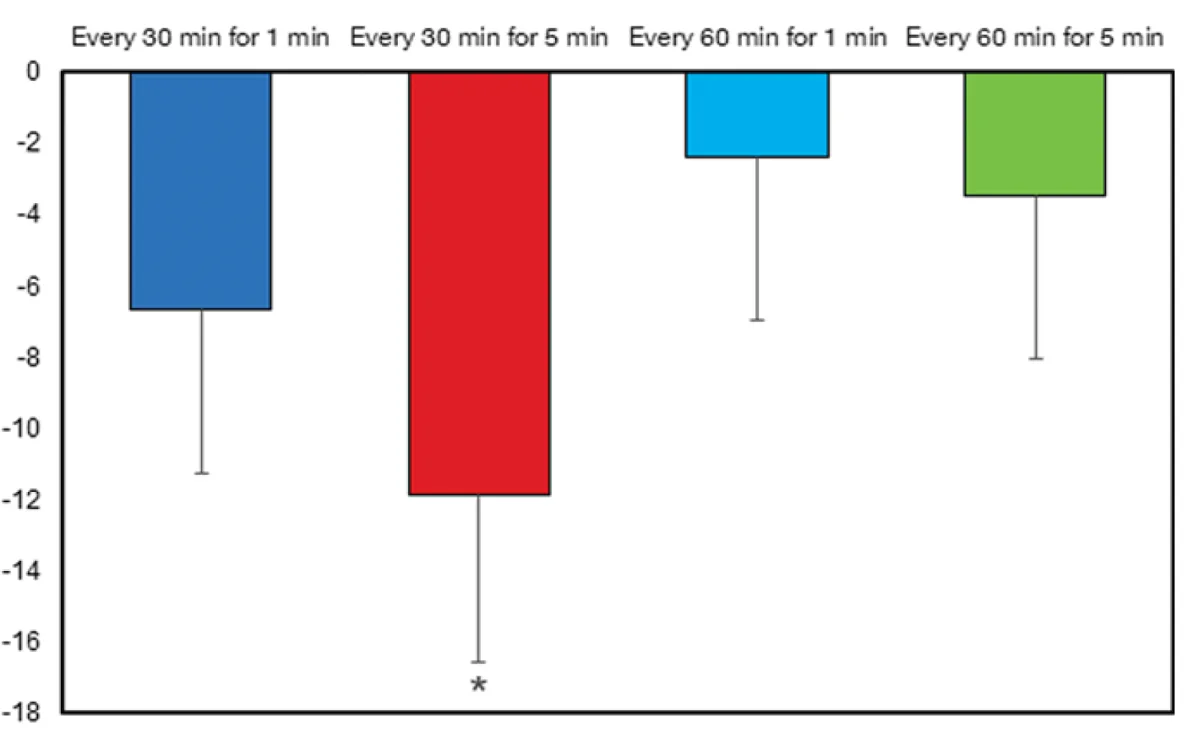
The implications of these findings are significant, considering the sedentary nature of modern lifestyles and the rising prevalence of metabolic diseases such as non-alcoholic liver disease (15% in 2005 to 25% in 2010) and prediabetes (11.6% in 2003 to 35.3% in 2011). The study's participants, who were otherwise healthy adults, demonstrated that even light-intensity activity, such as a casual stroll, can counteract the metabolic risks posed by long periods of sitting. This research aligns with the growing body of evidence suggesting that small behavioural changes can have a substantial effect on health outcomes, as discussed in our previous article on VILPA (vigorous intermittent lifestyle physical activity). It's not just about reducing sitting time; it's about integrating movement throughout the day. The study's lead author emphasises the importance of these findings, especially for individuals in sedentary jobs, suggesting that incorporating these breaks could lead to long-term health benefits.
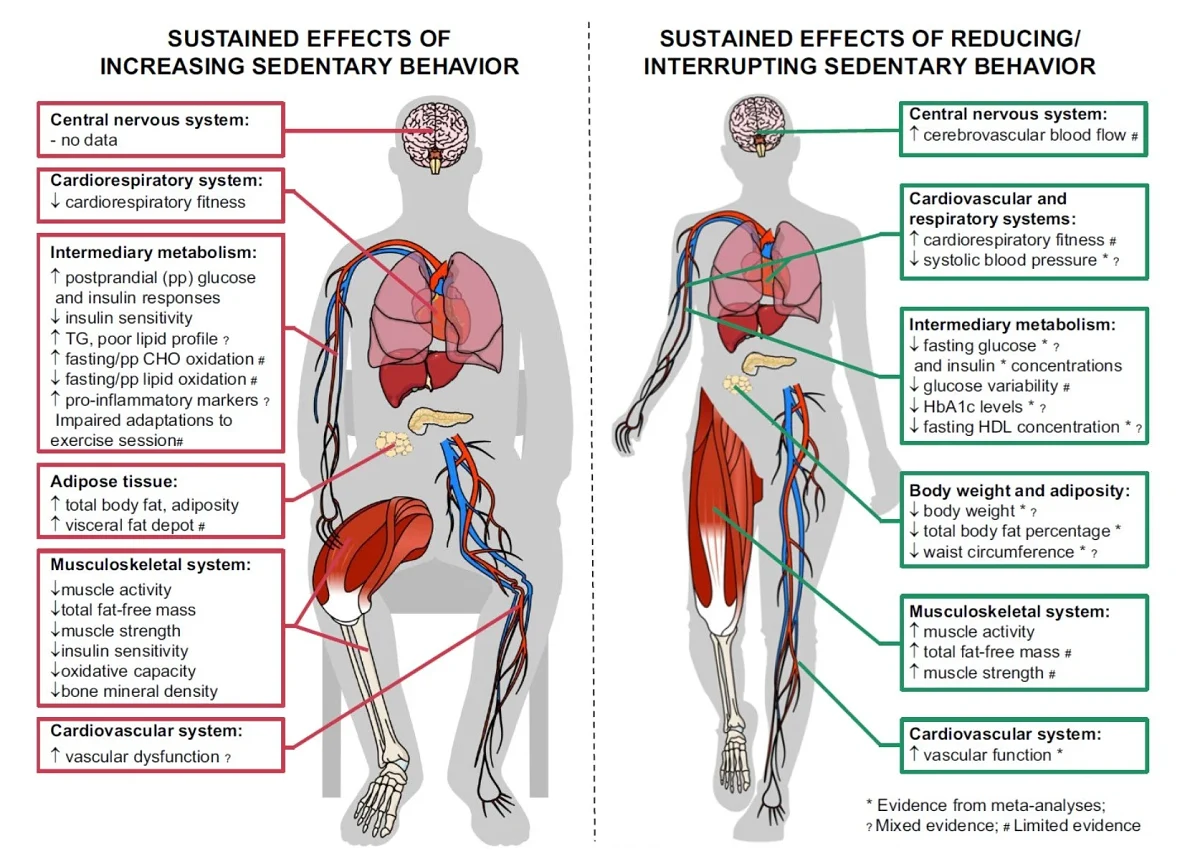
Expanding on the study's conclusions, the conversation around the dangers of a sedentary lifestyle has been gaining traction. The simplicity of the solution, taking regular breaks from sitting, and the challenges of implementing it in a society where many jobs require hours at a desk. There is a paradox of our times: while technology has made our lives easier, it has also tethered us to our seats, with the average adult spending 6.5 hours a day sitting. We need a paradigm shift to acceptance of movement in the workplace, advocating for policies that encourage walking meetings and stretch breaks, recognising the value this adds to mental, physical and productivity of knowledge workers.
Too much of a good thing? The discussion is not without its nuances. The efficacy of standing desks as an alternative to sitting has been a topic of debate. While they can reduce sitting time, standing for extended periods is not without issues, such as joint pain and fatigue.
The key message coming through is clear: balance and movement. The focus should be on regular, dynamic movement rather than simply swapping sitting for standing.
By
Dr Ran Crooke
Our members bring us questions like this one and get an answer written for their situation rather than for a general reader. That is part of what membership is.
Our physicians write on what the evidence supports, and on what is being sold ahead of it.